
SCOOTER EXPLAINS SCOTT’S METHOD
Read the Paytable First
Scooter starts where Scott’s handbook starts: know what you are looking at before spending money to find out. The game profile organizes the decision into reset levels, play notes, mechanics, positive scouting signals and walk-away signals. Each part has a different job.
Adapted from Scott A. Astin’s Slot Machine Advantage Players Handbook and Smooth Sailing in Rough Waters. The chapter and profile references are below.
WORKED HANDBOOK EXAMPLE · MONEY MANSION
Read four answers before the first paid attempt
Match the symbol count and positions to the exact cabinet’s Help screen.
The familiar artwork does not make every hat equivalent.
Identify what changes, what persists, and what ends the feature.
Confirm denomination, credits, award access, and any changed rules on the machine.
This is a reading map for Scott’s Money Mansion profile. It does not reproduce a cabinet rules screen. The current machine’s Help and paytable remain the authority for the version being considered.
01 · THE METHOD IN PRACTICE
Read the feature, not just the theme
The Money Mansion entry describes six hats entering a feature, with single, double and triple hats and mansion upgrades. Route 66 describes fireballs climbing a prize ladder. Wheel of Fortune describes a wheel whose awards depend on the version. Scott’s practical point is to understand the particular feature you are buying attempts at, rather than treating every familiar-looking cabinet as the same game.
At the machine, match the handbook entry to the displayed rules. Identify the trigger, eligible wager, credit values and ending condition. A profile is a starting reference; the actual cabinet determines what is available on this sailing.
02 · THE METHOD IN PRACTICE
Keep the five profile lenses separate
A reset level supplies context for a meter. Core mechanics explain an event. Scouting signals tell you what Scott looks at, while walk-away signals tell you why his test ends. A bright pot or a large major does not replace the rules. Reading all five parts prevents you from taking one attractive number out of the surrounding method.
03 · THE METHOD IN PRACTICE
Decide before you sit
In Smooth Sailing, Scott walks the floor before choosing a small group of candidates. The handbook adds a firm requirement: the session has one purpose, chosen in advance. Know the price of the attempt and the exit before beginning. If the rules cannot be understood, passing the machine preserves the same discipline that governs a successful session.
FROM SCOTT’S OWN WORDS
“Advantage play begins before the first spin.”
— Scott A. Astin, The Slot Machine Advantage Players Handbook
Next lesson: Credits, Denominations & Real Cost →Return to the complete learning path →THE TEACHINGS BEHIND THIS LESSON
Read the source passages
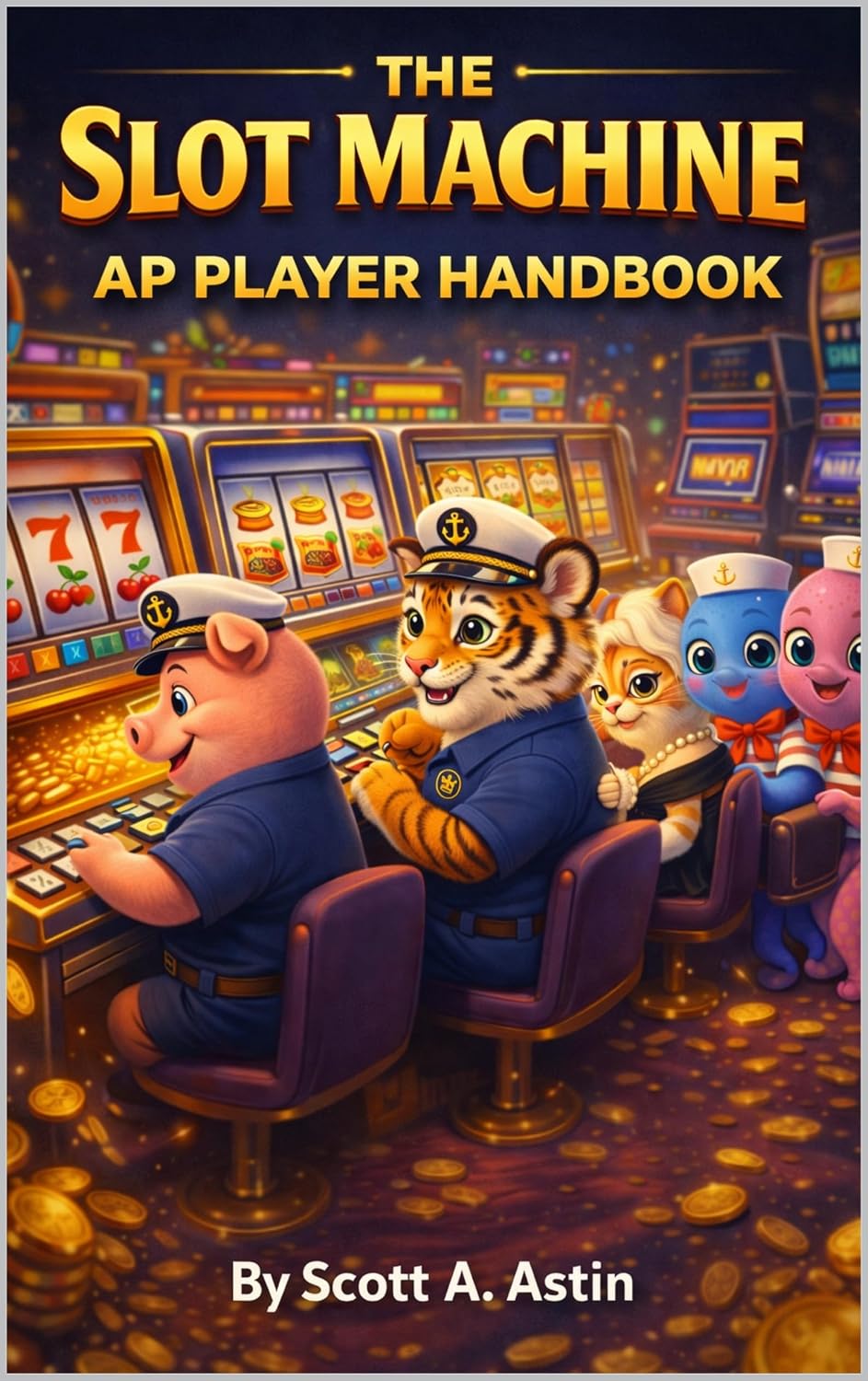 The Slot Machine Advantage Players HandbookIntroduction; Money Mansion, Ultimate Fire Link — Route 66 and Wheel of Fortune profiles→
 Smooth Sailing (In Rough Waters)Chapter 5 · Smart Play, Not Blind Luck→
Dollar amounts, point thresholds, offer examples and routines describe the books’ examples and Scott’s personal experience. Check the actual game and current sailing terms before applying them.