THREE FRAMES FROM THE JOURNEY
The Deck, the Canal, and the Eclipse Glasses
Three real photographs remind me why a voyage needs room for the moments nobody puts on the schedule.

The eclipse glasses make me smile because they announce exactly what happened: I stopped what I was doing and looked up. The photograph keeps the pause. For one bright moment, the event above me mattered more than whatever was on the schedule.
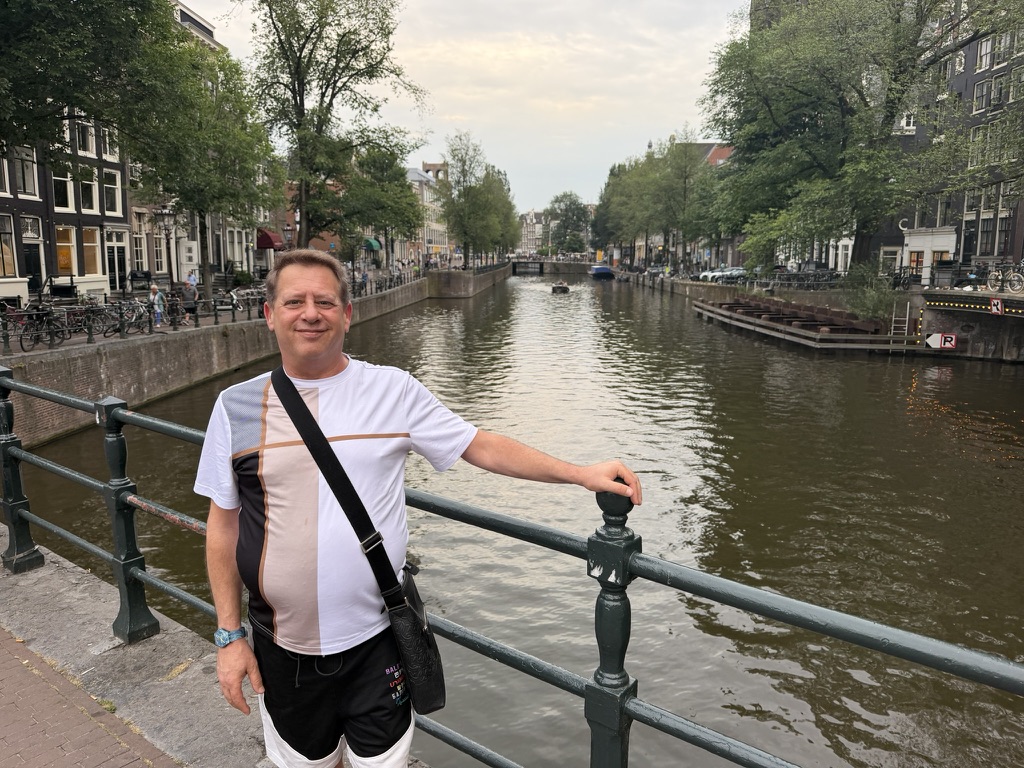
In Amsterdam, the canal supplies a different kind of pause. The water runs through the city instead of around the ship, and the photograph places me there among the bridge, buildings, and bicycles. The point of going ashore was to see this particular place, not to collect another port name.
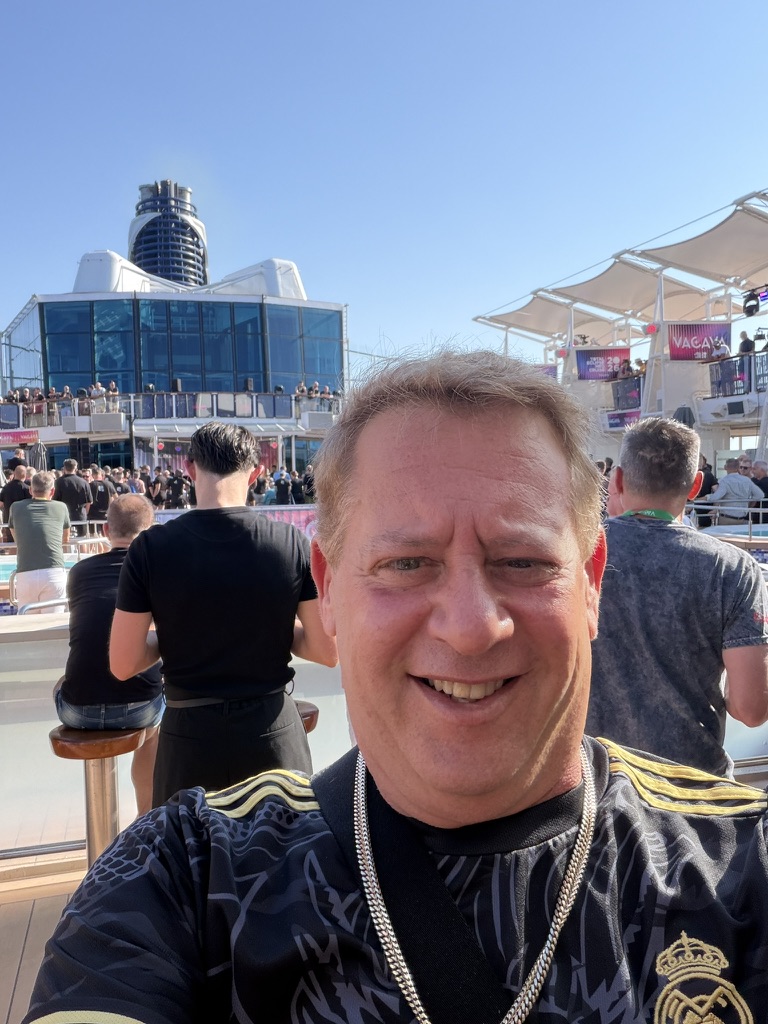
The third frame is the open deck. No celebrity, jackpot, or planned excursion is required. The ship itself gives the day a setting; being present long enough to notice it gives the photograph a reason to exist. These are small scenes, but they are scenes I can actually show you.
THE STORY BENEATH THE STORY
What the moment reveals.
The three photographs have different subjects: an event worth looking up for, a city worth walking through, and a deck worth pausing on. Their connection is the decision to notice what was actually in front of me.
The rest of the site gives the larger journeys and the people their own space. These frames stay small on purpose, because the photographs carry the evidence.
Scooter gives this moment a soundtrack for the small moments that leave more light than anyone expected: “Believe” by Cher .
FROM SMOOTH SAILING (IN ROUGH WATERS) · CHAPTER 14
The People You Meet in This Floating Village
“A ship is a floating village. The cast changes every week, but the rhythm doesn’t.”
In Scott’s account, community forms in ordinary shared places: elevators, buffets, casino aisles, pool chairs and lounges. Most exchanges are brief, but their repetition gives a long stay its human shape. He writes about passengers who disappear after one sailing and others who recognize him years later. The useful distinction is between collecting activities and allowing room for contact. A conversation, a shared joke or a familiar greeting can be the part of the voyage that survives long after the itinerary.
Explore Scott’s book →
CONTINUE THE STORY
The photographs have longer stories.
The journal follows the actual places in the archive. Scooter’s own page explains the character who goes along for the ride.