THE RESULT AND THE DECISION
A $5 Bet, a $605 Win, and the Exit Rule
The Dragon Link photograph records a real result. The handbook explains why the choice after the win still matters.
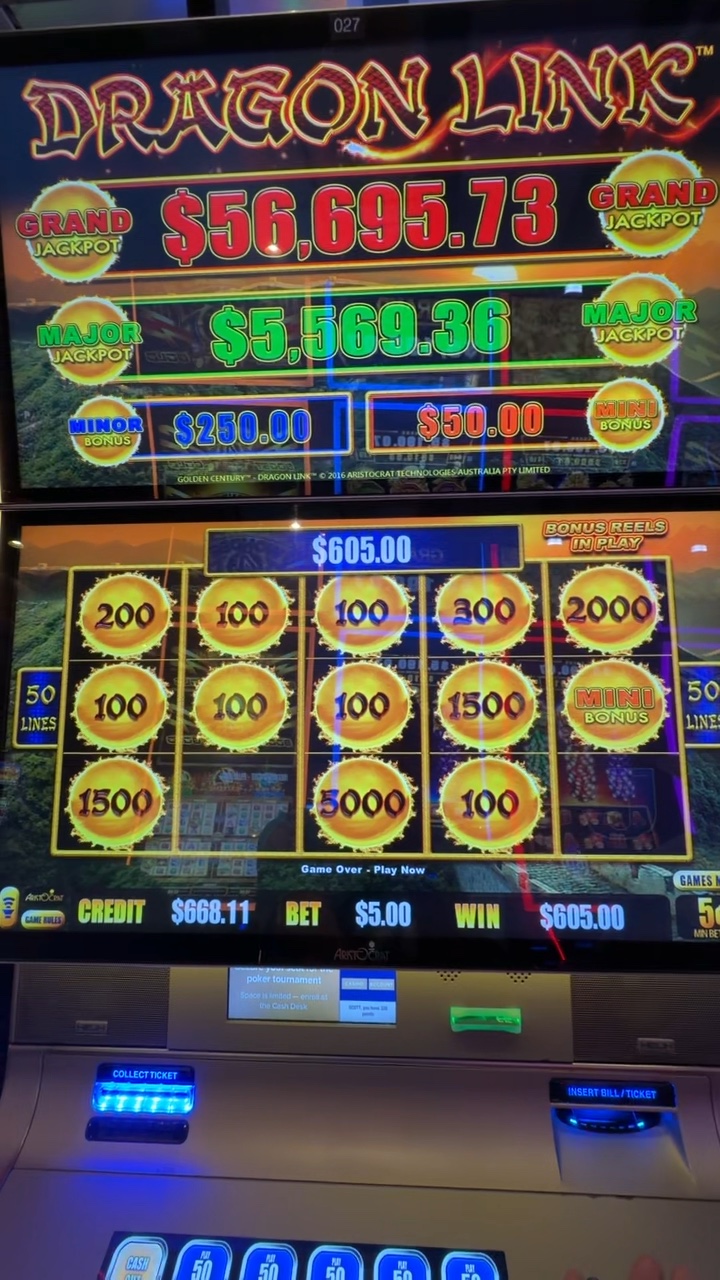
The Dragon Link screen is the part a camera can prove. The wager reads $5.00. The win meter reads $605.00. The feature has ended, and the machine is already inviting another play. Those are the numbers and words in the photograph.
What the image cannot tell you is how much money went into earlier spins, whether I played again, or what the whole session cost or earned. I will not turn one winning screen into a claim about a profitable night. My handbook draws the line in a different place: decide what you are willing to spend and when you will leave before the machine begins changing your mood.
A result deserves to be recorded accurately. The next spin deserves a separate decision. The light on the screen may be exciting, but the most valuable control is still the one I can use away from it: I can end the session on the terms I set.
THE STORY BENEATH THE STORY
What the moment reveals.
The photographed $605.00 win is a single documented result on a $5.00 bet. It is not evidence of net profit, a repeatable machine state, or what Scott did after the screen displayed “Play Now.”
The handbook calls advantage play conduct-based. That makes the unphotographed exit decision central: a player can celebrate a result and still hold to a rule set before the first wager.
Scooter gives this moment a soundtrack for the separate decision after a $605.00 screen invites another $5.00 play: “The Safety Dance” by Men Without Hats .

CONTINUE THE STORY
The photograph is a result; the handbook is the rule.
The class explains how to set time and loss boundaries. The handbook gives the conduct-based framework behind them.