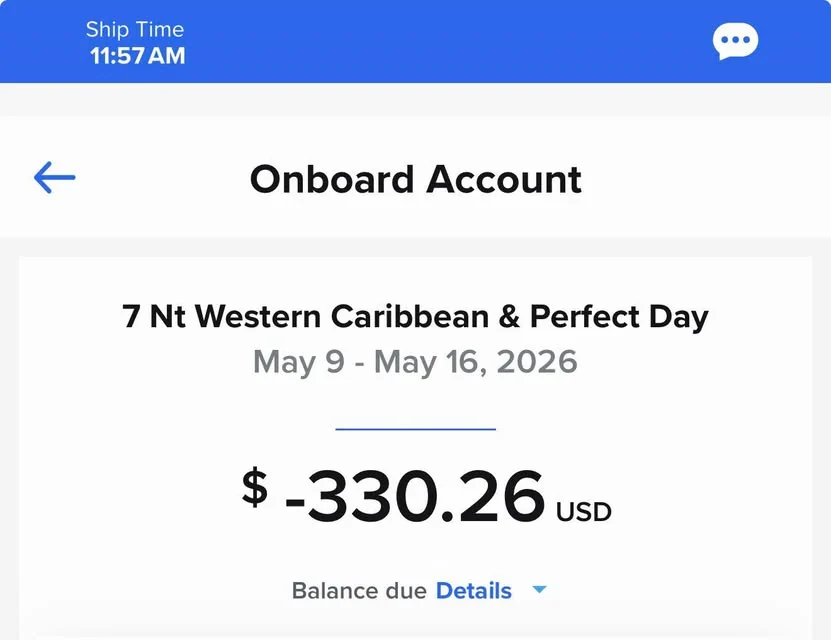
Starting a cruise with a credit balance
That’s how I like to start off a cruise
Life at Sea
Understand the full cost of a cruise, including travel, mandatory charges and optional spending, while protecting savings and essential obligations.
With Scooter Stardust · Teachings adapted from Scott Astin’s books
Because the cabin is one part of the trip. Scott’s cruise-fuel idea starts with a deliberate allocation after protecting income obligations and the future. That allocation still has to cover the costs that remain: taxes, fees, gratuities, insurance, getting to the port and the extras you choose aboard. A discounted cabin can make a trip useful. It cannot make the other charges disappear.
Use his structure, not his number. His reported spending belongs to his circumstances and the period he describes. Your home costs, routes, insurance needs and income are different. Begin with a trip you could afford without an unexpected win. If the plan requires the casino to fill a gap in the essential bill, the budget is depending on something it cannot control.
In a separate optional allocation, if you choose to play at all. It must fit within the whole trip and the longer travel budget. Scott’s daily personal-money ceiling is not an instruction to spend that amount every day. Multiply a ceiling across a long run of sailings and the possible exposure becomes clear. A limit protects you only when the larger budget can absorb it too.
Consider a clearly illustrative trip, with no quoted provider prices. Add the travel charges, the mandatory cruise charges and the discretionary choices. Keep the optional casino allowance beside them rather than subtracting an expected win. Now compare the sum with the money already allocated to travel. That comparison tells you whether the trip fits before you arrive, which is the calmest time to make the decision.
A complete budget does not need to make every day austere. It makes enjoyment less uncertain by protecting what has to work first. Scott describes treating cruise fuel as intentional spending while continuing to care about future security. The complete book explains the land-base tradeoffs and the wider balance sheet behind his version.
Adapted from Smooth Sailing (In Rough Waters), by Scott A. Astin. Scooter presents an adaptation, not verbatim quotations.
That’s how I like to start off a cruise